Commercial Waste in Beaconsfield
Commercial waste in Beaconsfield needs a straightforward, dependable service that keeps business premises clear, compliant and ready for the working day. Our work covers the collection and removal of mixed business waste, from routine office rubbish to bulky items and other non-hazardous materials that build up over time. Where different waste streams need separate handling, we plan the removal so that the job stays orderly and the right materials are directed to the right place.
We also help when premises need a one-off clearance rather than a regular pickup. That can include office moves, refurbishments, storage rooms, stock overspill and general commercial clear-outs. The aim is simple: reduce disruption, remove waste efficiently and leave the space usable again. If you need to arrange commercial waste removal for a unit, office or shared workspace, start by looking at the kind of waste that needs collecting and the access available on site.
Business waste removal is often the best fit when a company wants a clear, practical collection for everyday waste and larger disposable items. We can also support businesses that need occasional clearances after changes to layout or occupancy, so the service is not limited to a single type of premises. Every site is different, so the collection approach should suit the waste, the schedule and the space available.
Business waste collections for everyday operations
Many commercial customers need waste removed without interrupting staff or customers. That may involve bags, cardboard, packaging, redundant office items, shelving, mixed rubbish or general clutter from work areas. Our business waste collection service is designed to handle that practical mix. It can be used as an occasional clearance or as part of a wider tidy-up before a handover, move or refit. The focus is on keeping the process controlled and efficient rather than turning it into a prolonged project.
Where waste is accumulated in back rooms, corridors, storerooms or plant areas, a collection plan helps avoid unnecessary handling. Good preparation is simple: separate anything that must stay on site, group waste in one area if possible, and note whether there are stairs, lifts or loading restrictions. That information helps with planning and supports a smoother removal on the day. If your waste includes items that need special handling, they should be identified early rather than mixed in with general refuse.
Office clearance can be relevant when business premises need more than a standard rubbish collection, especially where desks, chairs, cabinets or mixed office contents are involved. For regular disposal, some customers also look at general waste removal as a broader option for non-hazardous materials. Both types of service are about keeping the workplace functional and reducing the amount of waste left to manage internally.
Clearances for offices, stockrooms and shared workspaces

Office clearances often involve a combination of furniture, paper waste, packaging, broken equipment and items that no longer belong in the workplace. A structured clearance is useful when a business is redesigning its layout, consolidating rooms or leaving a site altogether. We can remove the contents that are ready to go while leaving the items that need to remain in place. This helps the process stay controlled, especially where several teams share the same area.
Stockrooms and shared workspaces can become crowded with old materials, returns, surplus fittings and redundant storage items. A careful clearance should take account of what is stored where, what needs to be separated and what access is available for removal. In some premises, that may mean working around active operations; in others, it may be a full emptying of the area. The practical point is that the clearance should match the condition of the site rather than force the site to fit a fixed routine.
Flat clearance is listed for domestic settings, but it can still be useful to understand how a one-off clearance is organised when a property holds a range of mixed contents. Likewise, house clearance shows the same principle at a larger scale: assess the volume, sort the contents and remove what is no longer needed. Those pages are not commercial services, but they demonstrate the kind of careful planning that also matters in workplace clearances.
Bulky items and furniture disposal
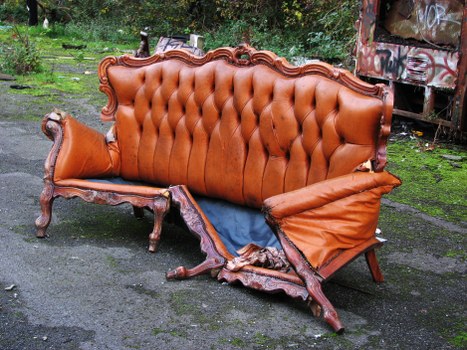
Some commercial waste jobs are less about loose rubbish and more about removing furniture or other large items that are awkward to move internally. Chairs, tables, cabinets, shelves, reception pieces and other bulky items can slow a clearance if they are left until the end. By separating them early, it becomes easier to plan the route out of the building and decide whether dismantling is sensible. The right approach depends on the item, the access route and whether it can be moved safely as a whole.
Furniture disposal also matters when businesses are refreshing their workspace rather than clearing it completely. Outdated desks, worn seating and surplus storage units can be removed in stages so that operations continue while the space is updated. Where possible, keeping reusable items separate from general waste helps make the collection more organised. It also means the waste stream is easier to describe when you ask for a quotation, because the quantities and item types are clearer.
Furniture disposal is useful if the main job is to take away items that are too large for normal waste handling. Where several pieces must go together, furniture clearance gives a broader option for clearing grouped contents in one visit. Both can be relevant to offices, retail rooms, reception areas and other business premises that need a tidy, workable result.
Special item collections and waste separation

Not all commercial waste is the same, and some items deserve separate attention. Appliances, bedding, confidential materials, mixed rubbish and other specialised items may need to be removed through the right route so they do not end up handled as ordinary waste. A good commercial waste service should be clear about what can be collected, what should be kept apart and what may need extra preparation before removal. That keeps the process practical and helps avoid unnecessary delays.
Where a business is clearing a room that contains different categories of material, a short itemised note is often enough to start planning. You do not need a long inventory; however, it helps to know whether the load includes furniture, paper, cartons, appliances or anything that could need a separate approach. Clear descriptions make it easier to quote accurately and to choose the right collection method. If the site has limited access, that should be mentioned at the same time.
Fridge and appliance removal suits items that are too awkward for general collection and need a more specific disposal route. If you are dealing with documents, confidential shredding is a separate consideration that keeps sensitive paper out of ordinary waste. For heavier household-style items, mattress and sofa disposal shows how large pieces are handled when they need dedicated removal rather than a standard bin service.
Pricing factors and how quotations are prepared
Commercial waste quotations usually depend on the amount of material, the type of waste, where it is located and how straightforward the removal will be. Access matters as well: ground-floor collections are not the same as upper-floor clearances with tight stairwells or restricted parking. If waste must be carried through busy areas or moved from several rooms, that may also affect how the job is planned. A quotation should reflect the actual collection rather than a generic estimate.
When you ask for pricing, it helps to mention the approximate volume, the main item types and any on-site restrictions. Photographs can be useful because they show scale and access, but they are not the only way to describe a job. If you already know which items are staying and which are leaving, say so clearly. Good detail leads to a better match between the service and the work needed, which is especially helpful for mixed commercial clearances.
Pricing and quotes is the most relevant page when you want to understand how a job is assessed before work begins. If your enquiry involves an office, stockroom or other workplace with a varied load, this is the right place to look before you request a formal quotation. For a direct next step, you can also use the contact route on the site and ask for a commercial waste quote.
What can be removed from commercial premises
Commercial waste jobs commonly involve a broad mixture of items rather than one neat category. That might include packaging, cardboard, office contents, loose rubbish, damaged furniture, storage items, fixtures that are no longer needed and general clutter from rooms that have become overfilled. The service is most useful when it replaces uncertainty with a clear decision about what goes and what stays. Once that line is set, the collection becomes easier to organise.
Some businesses also need support with items generated by maintenance, fitting-out or storage reshuffling. Those jobs may involve repetitive waste from an ongoing project, or a one-off load that has built up during changeovers. A clear description of the material helps decide whether it sits within a standard collection or needs a more specific approach. If something is not appropriate for general waste handling, it should be identified before the visit rather than left until the loading stage.
Builders waste clearance is useful where commercial waste is mixed with refurbishment debris or trade-related material from fitting-out work. For premises with outdoor overgrowth or debris, garden clearance gives another example of how waste types can differ according to the site. Garage clearance shows the same practical idea in a more storage-focused setting, where items tend to be grouped rather than left as loose refuse.
Commercial waste planning for busy sites

Busy sites need waste removal that fits around operations, not a service that gets in the way of them. That means deciding whether the collection should happen before opening, after closing or during quieter periods. It also means checking whether items are gathered in one place or spread across several floors, because that affects how long the load-out may take. Good planning keeps the process efficient and reduces avoidable handling.
For larger or more complex jobs, it is sensible to think about three practical questions before booking:
- What type of waste is being removed?
- Where is it located on the site?
- Is there anything that needs to stay separate?
Book online can suit customers who already know what needs collecting and want to move the process forward. If you prefer to speak first, the contact-us page is the direct route for an enquiry about commercial waste in Beaconsfield. Either way, the important part is to describe the waste clearly so that the proposed service matches the actual job.
About Beaconsfield
Beaconsfield is a market town in Buckinghamshire, best known for its historic Old Town and the later planned New Town that developed after the arrival of the railway in the nineteenth century. The older part of the town keeps a more traditional street pattern, with buildings and public spaces that reflect its long-established character, while the newer centre is arranged around shopping streets and transport links that serve modern residential and business life. This contrast gives the town a layered identity, where different periods of growth remain visible in the built environment. The town sits within an attractive part of south Buckinghamshire, with easy links towards the Chiltern Hills and other nearby settlements. Its location has made it a long-standing point of local movement and trade, and its streets retain a mix of independent shops, services and civic buildings. The area also has cultural associations that go beyond its size, including a reputation for literary and social history as a prosperous Buckinghamshire community. For many visitors, the most memorable impression comes from the contrast between the compact historic core and the more modern facilities around it, which together create a town that feels both settled and active. The surrounding landscape adds to that character, with tree-lined residential roads, accessible countryside nearby and a sense of continuity between older settlement patterns and later suburban growth.
Recycling, sorting and responsible handling
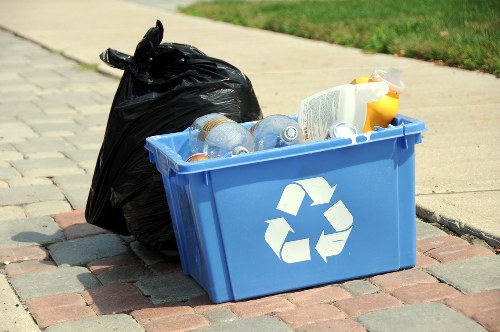
Responsible commercial waste handling is not only about removing items quickly; it is also about deciding what should be separated before disposal. Cardboard, reusable office furniture, electrical items and general rubbish may follow different routes, so a useful service should take account of those distinctions. Sorting material at the source helps the collection stay orderly and makes it easier to direct each load appropriately. That is especially important where a business wants to reduce unnecessary mixing.
There are also jobs where the waste stream includes items that are no longer useful but still contain value in parts or materials. In those situations, it is sensible to keep them distinct from ordinary refuse. The same applies to premises that are changing use, closing one part of a site or preparing for internal works. A calm, well-ordered approach keeps the process manageable and avoids the kind of last-minute sorting that tends to slow everything down.
Recycling and sustainability is the most relevant page for customers who want to understand how waste is separated and considered beyond simple removal. If you are ready to discuss your own site, ask for a commercial waste quotation and describe the type of waste, the access and the timing that would suit your business. That is usually enough to begin planning a practical collection.